The most common reason blinds don’t fit is a measurement error, not a manufacturing one. Learning how to measure windows for blinds is the single most important step before you buy, because custom blinds are made to the exact numbers you provide. A fraction of an inch can mean the difference between a clean, professional fit and blinds that gap, bind, or sit crooked.
In this guide, we walk you through the whole process. You’ll learn why accurate measurements matter, which tools to use, how to choose between inside and outside mount, and how to measure step by step for every major blind type. We also cover the mistakes we see most often and share the tips our installers use in the field.
Why Accurate Window Measurements Matter
Accurate measurements protect your investment. When the numbers are right, everything else falls into place.
- Proper fit: Custom blinds are cut to your measurements, so precision determines whether they sit flush.
- Better light control: Tight measurements reduce light gaps along the edges.
- Improved privacy: A snug fit leaves fewer openings for people to see through.
- Energy efficiency: The U.S. Department of Energy notes that well-fitted window coverings reduce heat loss in winter and heat gain in summer.
- Longer product lifespan: Blinds that fit correctly move smoothly and wear out slower.
- Easier installation: Correct depth and width mean brackets line up the first time.
We measure to the nearest 1/8 inch on every project, because that is the standard blind manufacturers use to cut your order.
Tools You’ll Need
You don’t need much to measure correctly, but the right tools matter.
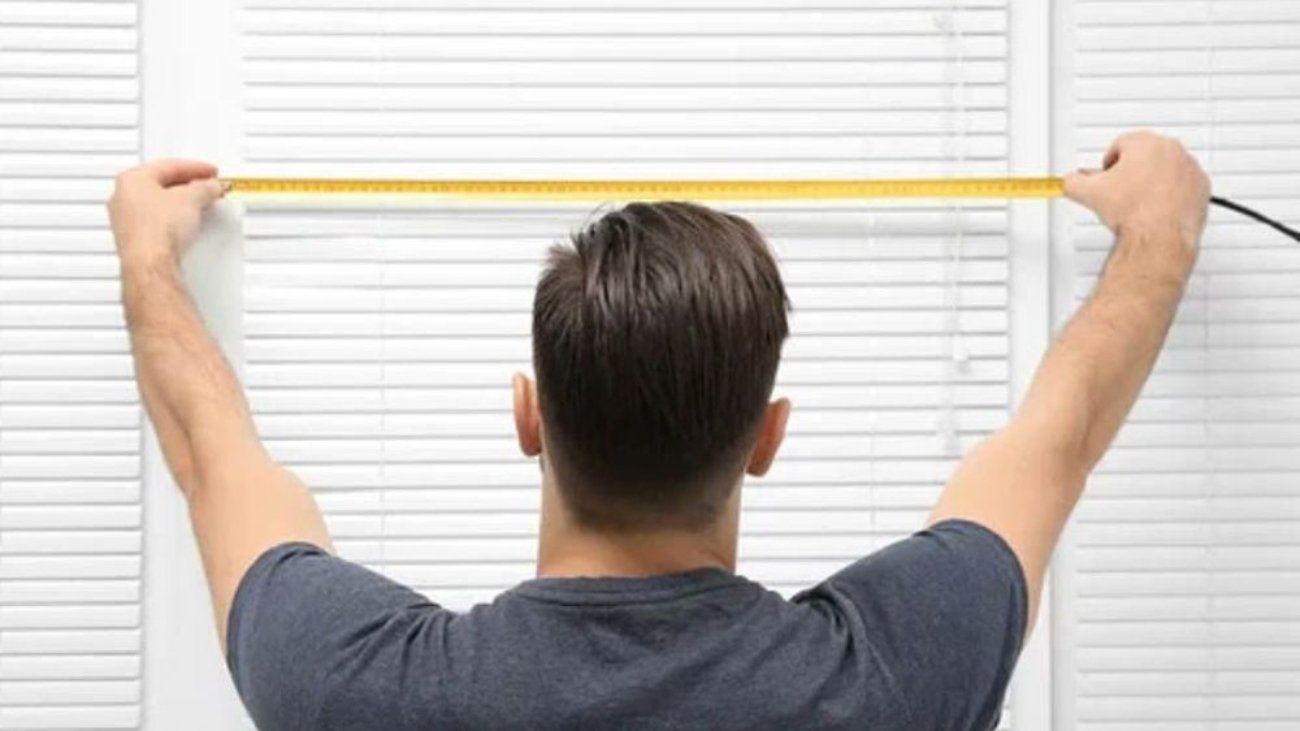
- Steel tape measure: The most important tool. Steel stays rigid and gives exact readings.
- Pencil: For marking and recording without smearing.
- Notepad or paper: To write down each measurement clearly.
- Ladder or step stool: For safely reaching the top of tall windows.
- Level (optional): To check whether your window frame is square.
We recommend a steel tape measure over a cloth or fabric one. Cloth tapes stretch and sag over time, which throws off your numbers by an eighth of an inch or more. That small error is enough to ruin a custom order.
Understanding Inside Mount vs Outside Mount
Before you measure, decide where the blinds will sit. This choice changes how you take every measurement.
Inside mount means the blinds fit inside the window frame, giving a clean, built-in look. Outside mount means the blinds attach to the wall or trim above and around the window, covering the opening entirely.
| Feature | Inside Mount | Outside Mount |
| Look | Recessed, built-in | Layered, framed |
| Best for | Deep frames, decorative trim | Shallow frames, uneven windows |
| Light control | Small edge gaps possible | Better edge coverage |
| Depth needed | Requires enough frame depth | No depth requirement |
| Rooms | Living rooms, home offices | Bedrooms, bathrooms, kitchens |
Inside mount works best in living rooms and home offices where you want a tidy, minimal look. Its main limitation is depth. If your frame is too shallow, the blinds won’t fit.
Outside mount works best in bedrooms and bathrooms where privacy and full darkness matter. It also hides crooked or out-of-square windows. The trade-off is a bulkier appearance that projects from the wall.
How to Measure Windows for Inside Mount Blinds
For inside mount, you report the exact opening size. The factory makes small deductions so the blinds fit. Never subtract anything yourself.
Width:
- Measure the width at the top, middle, and bottom of the window opening.
- Record all three numbers.
- Use the narrowest measurement.
Height:
- Measure the height on the left, center, and right sides.
- Record all three.
- Use the longest measurement so the blinds fully cover the opening.
Depth:
- Measure how deep the frame is from the front edge to the glass.
- Check the minimum depth required for your chosen blind type.
A quick tip: measure width before height, and always write width first. The industry standard lists width by height, in that order. Mixing them up is one of the most common ordering errors we correct.
How to Measure Windows for Outside Mount Blinds
Outside mount gives you room to cover the opening completely, which improves privacy and cuts light leaks.
Width:
- Measure the width of the opening.
- Add at least 3 inches to each side, for a total overlap of 6 inches.
- Wider overlap blocks more side light.
Height:
- Measure from where the headrail will sit to the sill or your desired stopping point.
- Add 2 to 3 inches above the opening for mounting room.
Overlap recommendations:
- More overlap means fewer light gaps.
- Extra coverage improves privacy in bedrooms and bathrooms.
- On sliding doors and large picture windows, generous overlap keeps the whole opening covered.
Measuring Different Types of Blinds
The core method stays the same, but some products need extra attention.
Roller Blinds
Measure the opening exactly. Remember that the fabric is slightly narrower than the headrail, so inside mount roller blinds leave small side gaps. For full coverage, choose outside mount.
Faux Wood Blinds
Faux wood blinds are heavier and need adequate frame depth for inside mount. Check the depth carefully. These hold up well in kitchens and bathrooms where humidity would warp real wood.
Vertical Blinds
Vertical blinds suit sliding doors and large picture windows. Measure width and height as usual, and confirm you have clearance for the vanes to rotate and stack.
Cellular Shades
Cellular shades compress when raised, so height is forgiving. Measure width precisely for a snug inside mount. Their honeycomb design adds insulation, which supports the energy savings the Department of Energy describes.
Roman Shades
Roman shades stack fabric at the top when raised. Measure the opening accurately and account for the stack height so it doesn’t block your view.
Zebra Blinds
Zebra blinds use alternating sheer and solid bands. Measure like roller blinds, and confirm depth for inside mount so the roller mechanism clears the frame.
Common Measuring Mistakes
We see the same errors again and again. Avoid these and you avoid most fit problems.
- Measuring only once: Windows are rarely perfectly square. Always measure in three places.
- Using a cloth tape: Fabric stretches and gives false readings.
- Rounding numbers: Record to the nearest 1/8 inch. Never round to the nearest inch.
- Ignoring depth: Skipping depth is the top cause of inside mount failures.
- Mixing width and height: Always list width first, then height.
- Choosing the wrong mount: A shallow frame can’t hold an inside mount.
- Ordering before double-checking: Verify every number before you buy.
Professional Tips for Perfect Measurements
These are the habits our installers follow on every job.
- Measure twice and record once. We confirm each number before writing it down.
- Use a level to check whether the frame is square. If it isn’t, outside mount often looks cleaner.
- Label each window by room, such as “living room left” or “primary bedroom.”
- Keep a diagram of each opening so you don’t confuse them later.
- For bay windows, measure each section separately since angles vary.
- When in doubt, request a professional measurement. We measure so you don’t carry the risk.
Frequently Asked Questions
How do you measure windows for blinds?
Use a steel tape measure to record the width at the top, middle, and bottom, and the height at the left, center, and right. For inside mount, report the exact opening. For outside mount, add overlap. Always list width before height and measure to the nearest 1/8 inch.
What tools do you need to measure for blinds?
You need a steel tape measure, a pencil, and a notepad. A ladder helps with tall windows, and a level tells you whether the frame is square. We recommend steel over cloth tape because fabric stretches and produces inaccurate readings.
How accurate should blind measurements be?
Measure to the nearest 1/8 inch. This is the standard blind manufacturers use to cut custom orders. Rounding to the nearest inch is enough to cause gaps, binding, or a crooked fit, so precise numbers matter on every window.
What is an inside mount?
An inside mount means the blinds fit inside the window frame for a clean, recessed look. It requires enough frame depth to hold the brackets. Inside mount suits living rooms and home offices where you want a built-in appearance.
What is an outside mount?
An outside mount means the blinds attach to the wall or trim above and around the window. It covers the opening fully, improves privacy, and hides crooked frames. Outside mount works well in bedrooms, bathrooms, and on sliding doors.
Should you measure width or height first?
Measure and list width first, then height. The window covering industry always writes measurements as width by height. Reversing the order is a frequent ordering mistake that leads to blinds sized incorrectly for the opening.
How many times should you measure?
Measure three times for width and three times for height. Windows are rarely perfectly square. For inside mount, use the narrowest width and the longest height so the blinds fit the opening and cover it fully.
Can I measure for blinds myself?
Yes. With a steel tape measure and this guide, most homeowners measure accurately. Follow the steps, record to the nearest 1/8 inch, and double-check before ordering. If a window is unusual or you want certainty, we provide professional measuring guidance.
What measurements are used when ordering blinds?
You provide width and height in inches, plus depth for inside mount. List width first. For inside mount, report the exact opening and let the factory make deductions. For outside mount, include your added overlap in the numbers.
What mistakes should I avoid?
Avoid measuring only once, using a cloth tape, rounding numbers, and ignoring depth. Don’t mix up width and height, and always double-check before ordering. These few habits prevent the majority of fit problems we see.
Why Homeowners Choose The Blinds R Us
We help homeowners across the United States get the right fit the first time. Here’s what we provide:
- Custom window treatments cut to your exact measurements.
- Professional measuring guidance so you order with confidence.
- Quality craftsmanship backed by careful attention to detail.
- A wide product selection, including roller blinds, faux wood blinds, cellular shades, and motorized blinds.
- Personalized customer service from people who answer your questions directly.
- Expert installation support to finish the job correctly.
We follow the measuring standards used across the window covering industry, including WCMA safety guidelines, so your blinds fit and operate safely.
Conclusion
Accurate measurements are the foundation of blinds that fit, block light, and last. Choose your mount type first, use a steel tape measure, record every dimension to the nearest 1/8 inch, and measure in three places. Always list width before height, check your depth for inside mount, and double-check your numbers before ordering.
Take your time, and don’t leave the fit to chance. If you want expert help with custom blinds or a professional measurement, contact The Blinds R Us. We’ll guide you through every window and stand behind the result.